
Professional networking is an important part of building business relationships. Whether someone is attending a conference, meeting a potential client or connecting with a supplier, exchanging contact details is often the first step towards future communication.
Traditional paper business cards have served this purpose for many years. However, as professionals use more digital platforms to communicate and share information, digital business cards are becoming a useful alternative.
What Is a Digital Business Card?
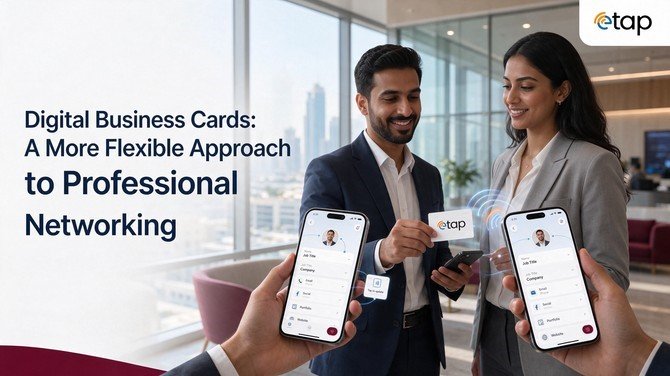
A digital business card is an online profile that allows a person to share professional contact information electronically.
It can include details such as:
- Name and professional designation
- Phone number and email address
- Company website
- Social media profiles
- Business location
- Portfolio or service links
- WhatsApp contact option
A digital profile can be shared through a link, QR code or an NFC-enabled card. With an NFC card, a compatible smartphone can open the linked profile when brought close to the card.
Why Are Professionals Moving Beyond Paper Cards?
Paper cards are useful, but they have limitations. They contain a fixed amount of information and usually need to be reprinted when contact details change.
A digital profile offers greater flexibility because its online information can be updated without distributing a completely new physical card, provided the profile and link remain active.
Here are some reasons professionals are considering digital business cards.
1. Contact Details Can Be Updated
A change in phone number, job title or company information does not necessarily require a new batch of physical cards. The linked digital profile can be updated.
2. More Information Can Be Shared
A paper card has limited space. A digital profile can include additional information such as websites, social media links, portfolios and service pages.
3. Convenient Contact Sharing
An NFC card or QR code can help another person open a digital profile without manually typing contact details into a browser.
4. Supports Modern Networking
At conferences, business meetings and exhibitions, professionals can use digital profiles to share their details in a convenient format.
5. Reduces Dependence on Repeated Printing
A reusable digital profile can reduce the need to reprint cards whenever details change. The actual environmental impact depends on how the card and related products are manufactured and used.
6. Provides a Consistent Brand Presentation
Businesses can create digital profiles that follow their brand identity. This is particularly useful for teams that want employees to share information in a consistent format.
Who Can Benefit from Digital Business Cards?
Digital business cards can be useful across several industries.
Consultants and freelancers: Share services, portfolios and contact details with potential clients.
Sales professionals: Make it easier for prospects to access contact information after a meeting.
Corporate teams: Provide employees with consistently branded digital profiles.
Hospitality professionals: Share booking information, restaurant menus or service links where appropriate.
Event exhibitors: Connect with visitors without relying only on printed contact cards.
NFC Cards and QR Codes: Two Ways to Share a Digital Profile
NFC and QR codes can both direct users to a digital business card profile, but the interaction is different.
An NFC card uses a short-range wireless connection. The recipient taps a compatible smartphone near the card to open the linked destination.
A QR code uses the smartphone camera or scanning feature. The recipient scans the printed code to access the same type of digital information.
Some businesses choose to include both options so that people can use whichever method they prefer.
What Should You Include in a Digital Business Card?
A digital business card should be useful rather than overloaded with information.
Start with the essentials: your name, role, company, phone number, email and website. Then add relevant professional links, such as LinkedIn, a portfolio or a booking page.
Make sure the profile is easy to read on a mobile screen. Check that every link works and that the information stays current.
Final Thoughts
Digital business cards offer a flexible way to share professional information in an increasingly connected business environment. They can make networking more convenient, support consistent branding and allow contact details to be updated through a digital profile.
For a closer look at how this approach works, explore the benefits of digital business cards and the ways professionals can use them in everyday networking.